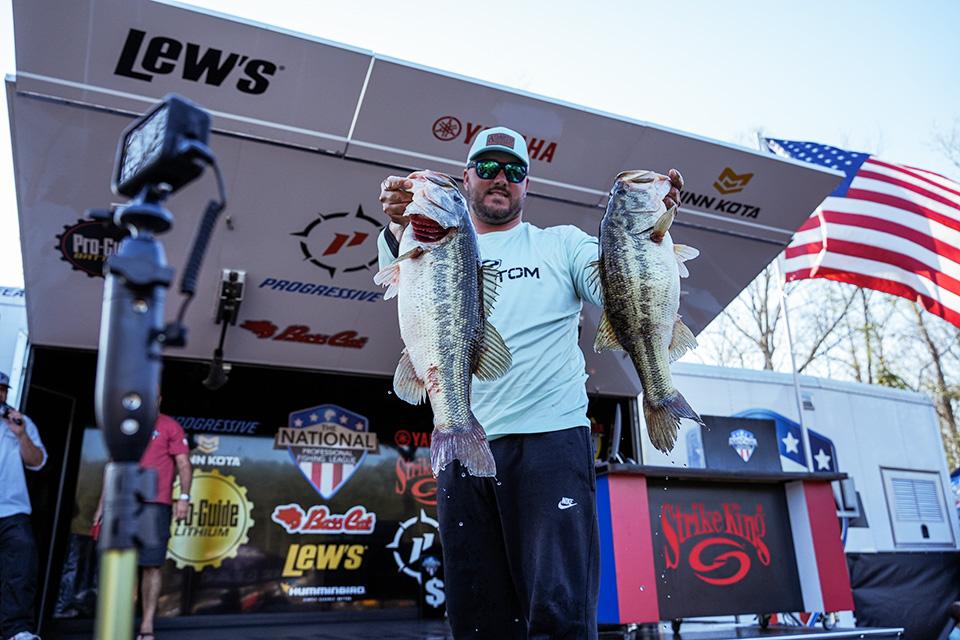
Story by Corey Casey | Photos by Tanner & Travis Lyons
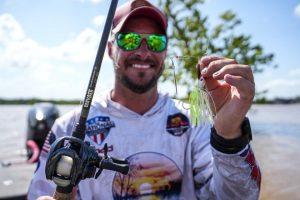
My personal best bass is a 9-pound, 14-ounce largemouth that ate a jerkbait in the middle of January. The water temperature was hovering right around 40 degrees. Most people would’ve looked at that forecast, rolled back over in bed, and waited for spring.
I’m glad I didn’t.
There’s just something about extreme cold—I’m talking 35–40-degree water—that makes giant bass show themselves. It’s not always comfortable, and it’s definitely not easy, but if you truly love catching bass—especially big ones—winter might be the most underrated season of the year.
A lot of anglers automatically think “cold water” means painfully slow fishing. Dragging a jig an inch at a time, soaking a bait forever. And yes, there are days for that. But don’t get locked into the mindset that bass in extreme cold won’t chase. Big ones still eat moving baits—and sometimes they eat them with authority.
My 9-14 didn’t come off the bottom. She crushed that jerkbait!
You Don’t Always Have to Crawl It
One of the biggest misconceptions about frigid water fishing is that everything has to be painfully slow. Truth is, you can still cover water and trigger reaction bites.
Some of my favorite cold-water producers include:
- lipless crankbaits
- bladed jigs
- spinnerbaits
- Alabama rigs
- jerkbaits (of course!)
Cold water bass group up, especially the bigger females. When you run a moving bait through the right area, it’s not unusual to get multiple quality bites in a short window. These fish aren’t roaming—they’re set up in key spots, and when a meal comes by, they’ll move for it.
The key is controlled movement. You’re not burning a bait wide open, but you’re also not dead-sticking it all day. A lipless bait ticking grass, a bladed jig slow-rolled just fast enough to thump, or a jerkbait with a good cadence can be absolute money.
You Don’t Always Have to Go Deep
Another myth: Cold water means deep water.
Not always.
That biggest bass of my life came from 7 feet of water. That’s not a typo.
Seven.
Depending on the lake, big bass will still use shallow cover and flats close to deeper water, even when it’s bitter cold. On my home waters of Santee Cooper, we’ve got plenty of shallow grass, stumps, and hard spots near creek channels and deeper drains. Those areas can be prime in winter, especially on sunny days when the water warms even a degree or two.
Shallow water can heat up faster than the main lake, and big bass know it. If there’s bait around and access to a quick depth change, don’t be afraid to fish less than 10 feet of water—even when your electronics say 38 degrees.
Big Bass Love Ugly Weather
Let’s be honest: extreme cold keeps most anglers at home. That means less pressure. Less trolling motor noise. Less boat traffic. And those older, wiser bass feel it.
The nastier the day, the better it can get. Gray skies, cold wind, even a little drizzle or sleet—those are the days giants seem to get comfortable moving around and feeding. You might not get a bunch of bites, but the ones you get can be the kind that change your year … or your life.
Winter fishing is a mental game. You’ve got to believe the next bite could be a double-digit fish. Because it absolutely could be.
Dress for It, Plan for It, Respect It
Loving winter bass fishing doesn’t mean ignoring the dangers. Cold water is no joke.
Dress in layers. Start with good base layers, add insulation, and finish with windproof outerwear. Keep your core warm, protect your hands, and don’t forget your face and head—you lose a lot of heat there.
I always bring a thermos with hot coffee or hot chocolate. Sounds simple, but it can turn a miserable day into an enjoyable one.
Most importantly, be safe. Wear your life jacket, use your kill switch, and be extra cautious running in low light or rough winter conditions. Let someone know where you’re going and when you plan to be back. Big bass aren’t worth taking unnecessary risks.
The Reward Is Worth It
There’s a special kind of satisfaction that comes from catching a giant when your guides are icing up and your breath looks like smoke. It’s not just another fish; it’s proof that you showed up when most people didn’t.
If you truly love bass fishing, don’t write off the extreme cold. Some of the biggest bass of the year get caught when water temps are 35-40 degrees and the boat ramp is empty.
Dress warm. Bring something hot to drink. Be smart and go chase the kind of bite that can make your whole season.
Because sometimes, the coldest days produce the hottest fish.
Corey Casey – Angler Profile