
Story by Chad Marler | Photos by Tanner & Travis Lyons
One of the hardest lessons I’ve learned in tournament fishing is accepting when something that worked yesterday is no longer working today. It sounds simple, but it’s one of the most mentally challenging parts of competitive fishing. We all want to believe that if we just stay patient a little longer, the fish will eventually set up the way they did before. Sometimes that happens. A lot of times it doesn’t.
In high-pressure tournaments, patterns do not slowly fade. They often collapse fast. Fishing pressure, changing weather, water movement, and seasonal transitions can all stack up and pull the rug out from under you. The anglers who survive those moments are not the ones who panic or abandon everything immediately. They’re the ones who recognize what’s truly happening and make disciplined adjustments without emotion taking over.
The first step is understanding the difference between a slow bite and a dead pattern. Early in the day, especially in tough conditions, bites may simply be delayed. Bass are still there, but they’re not feeding aggressively. A dead pattern feels different. The water looks right, the setup should be right, but the life is gone. You’re not seeing followers. You’re not getting quality bites. The subtle signs that once gave you confidence are missing. When that happens, forcing it rarely fixes the problem.
One mistake I see anglers make is changing too much too fast. When a pattern starts slipping, the instinct is often to completely abandon an area or run to the opposite end of the lake. That can be just as damaging as staying put for too long. Before making a major move, I try to make small, controlled adjustments. That could be changing angles, adjusting boat positioning, slowing down, or even speeding up. Sometimes it’s as simple as backing off a little deeper or fishing the same area from the opposite direction.
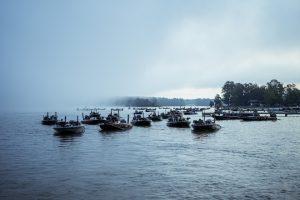
Pressure plays a huge role in pattern breakdowns. In tournaments, bass don’t get educated over weeks. They get educated over hours. Fish that were aggressive in practice or on Day 1 can become neutral or negative after seeing multiple boats. Recognizing that pressure is affecting fish behavior helps you avoid blaming yourself or your equipment. Instead, it pushes you to think about how bass are repositioning rather than disappearing.
Weather changes can accelerate everything. A front moving through, a wind shift, or falling water can instantly change where bass feel comfortable. When that happens, I focus less on the bait and more on location. Are the fish holding tighter to cover? Are they pulling out to the first break? Are they suspending instead of relating to the bottom? Those answers matter far more than color or brand.
The mental side of adjusting is just as important as the physical adjustment. When things go wrong, it’s easy to start fishing fast and sloppy. Decision making suffers when frustration creeps in. I’ve learned to slow myself down mentally, even if I’m covering water physically. Staying calm allows you to evaluate information instead of reacting emotionally to a tough stretch.
One thing that helps me is leaning on confidence areas. Even if a pattern dies, there are usually areas on a lake that consistently reload or give you a chance at a quality bite. They may not produce numbers, but they offer opportunity. In high-pressure situations, I’d rather fish for fewer bites that matter than chase ghosts all over the lake.
Adjusting doesn’t always mean finding something completely new. Sometimes it means refining what you already know. Other times it means admitting that what you believed in that morning is no longer the best option. That honesty with yourself is critical. Pride has ended more tournament days than bad weather ever has.
Ultimately, tournament fishing is not about being perfect. It’s about being adaptable. Patterns are temporary. Decision making is constant. The anglers who continue to grow are the ones who stay observant, stay calm, and stay willing to adjust when the situation demands it. When the pattern dies, the tournament is not over. In many cases, it’s just begun.
Chad Marler – Angler Profile